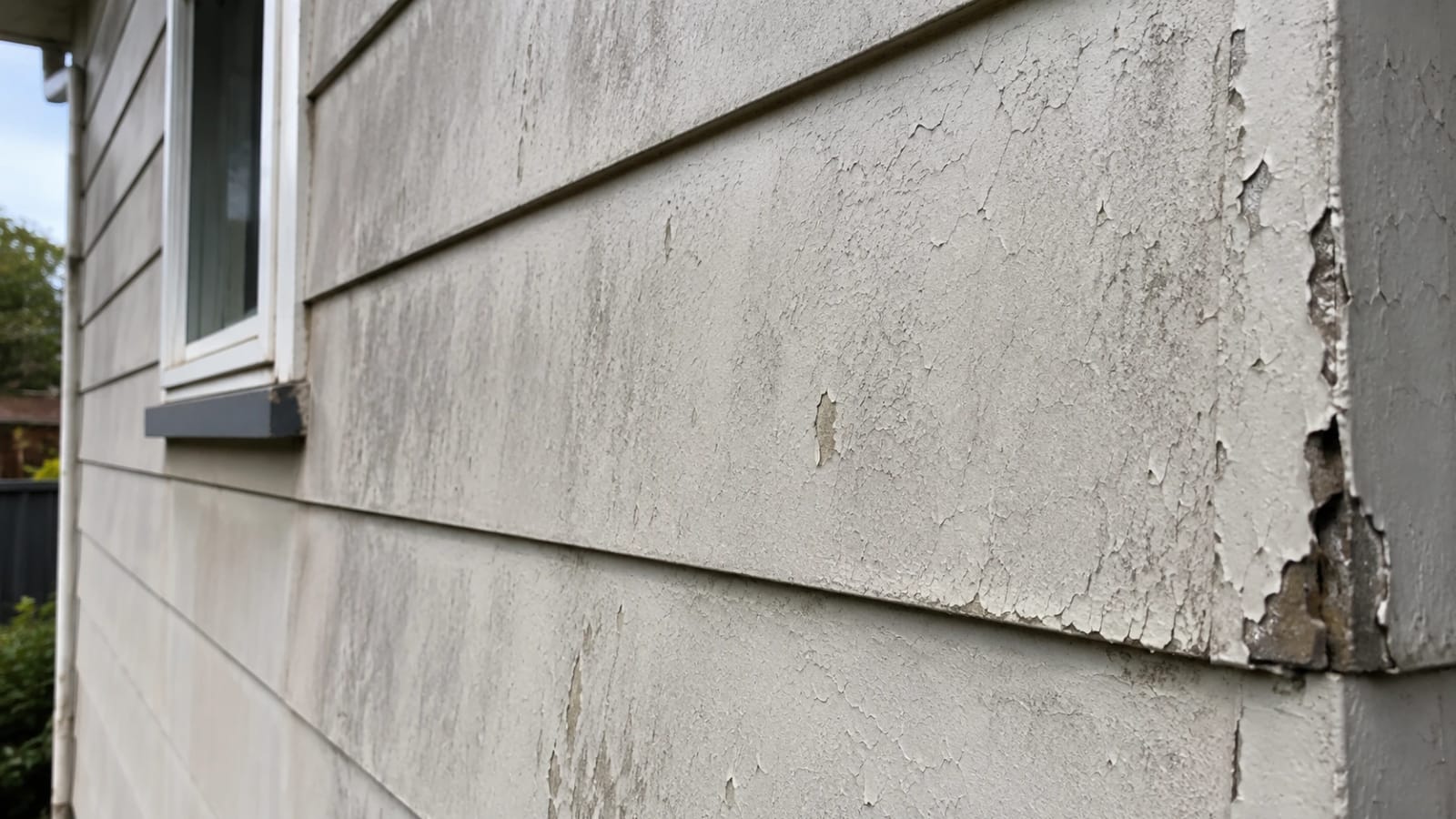
You are about to drill into a wall in a house built in 1978. The sheeting looks like every other fibro sheet you have drilled into a hundred times before. It might be exactly what it looks like. It might also be the thing that puts fibres into your lungs that will not show up as a problem for another twenty years.
Asbestos does not announce itself. That is what makes it dangerous, and it is why the law treats working near it as seriously as it does. Here is what you actually need to know before you cut into anything in a pre-1990 property.
The short answer
Any property built or renovated before 1990 should be treated as a possible asbestos risk. You cannot identify it by sight - only laboratory testing confirms it. If you suspect asbestos, stop work, do not disturb it further, and isolate the area. Non-friable asbestos under 10 square metres can generally be removed without a licence if you follow the Code of Practice. Anything larger, or any friable material, requires a licensed removalist.
1. Why this matters more than most compliance topics
According to the Asbestos Safety and Eradication Agency, Australia has one of the highest rates of asbestos-related disease in the world, a legacy of decades of widespread use in building products before it was banned entirely in 2003. Mesothelioma and asbestosis both have long latency periods - often 20 to 40 years between exposure and diagnosis. The tradie who disturbs asbestos today will not know for decades whether it mattered.
This is different from most WHS requirements, where the risk is immediate and visible - a fall, a shock, a crush injury. Asbestos exposure risk is invisible, delayed, and irreversible once it happens. That combination is exactly why the regulations around it are strict and why "it's probably fine" is not a risk assessment.
2. Where asbestos actually hides
Asbestos-containing material (ACM) was used extensively in Australian construction from the 1940s through to the late 1980s, with use declining through the 1990s before the total ban in 2003. If a property has not been substantially renovated since, ACMs could be present in:
- Fibro (AC) sheeting - external cladding, internal wall linings, eaves, fencing. The most common ACM tradies encounter.
- Textured ceiling coatings - the popcorn or textured finish common in ceilings from the 1970s and 80s.
- Vinyl floor tiles and backing - both the tile itself and the black adhesive backing were common ACM sources.
- Cement products - roof sheeting, guttering, downpipes, water and drainage pipes.
- Insulation - pipe lagging, some loose-fill ceiling insulation, and older hot water system insulation.
- Switchboards and electrical backing boards - some older switchboard backing material contains asbestos.
- Textured paint and render.
A useful rule: if the property was built before 1990 and has not had a full renovation since, treat any of the above as a possible risk until proven otherwise. The Asbestos Safety and Eradication Agency maintains detailed guidance on where ACMs are commonly found by building era.
3. You cannot identify it by looking
This is the part that trips people up. Asbestos cement sheeting looks identical to the fibre-cement sheeting sold today. There is no visual cue, no smell, no texture difference reliable enough to tell you what you are looking at.
The only way to know for certain is laboratory testing of a sample, collected by someone trained to take it safely - typically a licensed asbestos assessor. If you are working on a pre-1990 property and have any doubt, that doubt is the answer. Get it tested before you cut.
4. The awareness training requirement
Under the model WHS Regulations, a person conducting a business or undertaking must ensure that anyone who could be exposed to asbestos as part of their work has the information, training, and instruction necessary to do that work safely.
This is separate from a removal licence. Asbestos awareness training does not qualify you to remove asbestos - it teaches you to recognise likely ACMs, understand the health risks, and know the correct response if you suspect you have found it. Most principal contractors and several state regulators now require evidence of awareness training before allowing tradies to work on pre-1990 properties, particularly for demolition, renovation, and refurbishment work.
Awareness courses are available through RTOs listed on training.gov.au, typically a half-day session covering identification, health effects, and correct response procedures. It is a low-cost, low-time-commitment course relative to what it protects you from.
5. The 10 square metre threshold
Australian jurisdictions generally allow non-licensed removal of small quantities of non-friable (bonded) asbestos-containing material, provided safe work procedures under the Code of Practice for the Safe Removal of Asbestos are followed. The threshold in most states is 10 square metres.
Two terms matter here:
Non-friable (bonded) asbestos - the fibres are bound within a solid matrix, typically cement. Fibro sheeting is the most common example. It does not release fibres unless it is cut, drilled, sanded, or broken.
Friable asbestos - the material crumbles or can be reduced to powder by hand pressure. Pipe lagging and some sprayed insulation are examples. Friable material releases fibres far more easily and is significantly more dangerous to handle.
Any friable asbestos, regardless of quantity, legally requires a licensed asbestos removalist. Non-friable material under 10m² can generally be removed by an unlicensed person following the Code of Practice - full PPE, wetting down before disturbance, no power tools, correct bagging and disposal. Over 10m², a licensed removalist is required even for bonded material.
Each state regulator publishes specific guidance and can differ slightly on thresholds and notification requirements - check with your state WHS authority before proceeding with any removal, even small-scale.
6. What to do if you disturb asbestos on site
If you cut, drill, or break into material and suspect it might be asbestos:
Stop work immediately. Put the tool down. Do not continue the task to "just finish this bit."
Do not clean it up the normal way. No sweeping. No vacuuming with a standard vacuum. No dry-sanding or scraping. Every one of these actions puts more fibres into the air, not fewer.
Wet it down gently if practical. A light water mist can help suppress dust without further disturbing the material. Do not hose it aggressively.
Isolate the area. Close doors, restrict access, keep others - including yourself, once initial containment is done - away from the area.
Notify. Tell the principal contractor or property owner immediately. On a domestic job where you are the only tradie present, this responsibility sits with you.
Contact your state WHS regulator and a licensed assessor. They will advise on testing and, if confirmed, arrange safe removal and disposal.
Do not attempt to manage a suspected asbestos disturbance yourself beyond the initial stop-and-isolate steps. The tradie instinct to fix the problem and keep the job moving is exactly the wrong response here.
7. State regulator contacts
Asbestos removal and management sits under each state's WHS regulator, alongside additional state-specific asbestos coordination bodies in some jurisdictions:
- SafeWork NSW
- WorkSafe Victoria
- Workplace Health and Safety Queensland
- WorkSafe WA
- SafeWork SA
- WorkSafe Tasmania
- WorkSafe ACT
- NT WorkSafe
The Asbestos Safety and Eradication Agency also maintains national guidance and links to state-based asbestos removalist registers, useful if you need to engage a licensed contractor quickly.
8. Before you take on renovation work in an older property
A few habits that reduce risk before you have even picked up a tool:
Ask the age of the property upfront. Built before 1990, or last renovated before 1990 - either answer means treat the job as a possible ACM environment from the start.
Request an asbestos register if one exists. Commercial and some strata properties are required to maintain an asbestos register. Ask for it before you start, not after you have already cut into something.
Include asbestos risk in your SWMS. If the work involves materials that could contain asbestos, your Safe Work Method Statement should identify that risk and the controls in place - even if the plan is simply "test before cutting." The SWMS Generator in Smart Tools helps you build that documentation properly rather than leaving it as an afterthought. For the full structure of a compliant SWMS, see how to write a SWMS.
Price the risk into your quote. If a job on an older property might involve asbestos testing or removal, flag it as a condition in your quote rather than absorbing an unknown cost or discovering it mid-job.
Frequently asked questions
How do I know if a material contains asbestos?
You cannot tell by looking. Asbestos-containing products look identical to their non-asbestos equivalents. The only reliable method is laboratory testing of a sample collected by someone trained to do so safely. Treat any fibro, textured ceiling, vinyl flooring, or cement product in a pre-1990 property as a possible risk until tested or confirmed otherwise by a licensed assessor.
Can I remove asbestos myself as a tradie?
In most states, non-friable asbestos under 10 square metres can be removed without a licence if you follow the Code of Practice for safe removal. Anything over 10m², and any friable material regardless of quantity, legally requires a licensed asbestos removalist. Friable material crumbles by hand and releases fibres far more readily - it is treated more strictly for that reason.
What do I do if I accidentally disturb asbestos on a job?
Stop immediately. Do not sweep, vacuum normally, sand, or use power tools near it. Gently wet it down if practical, isolate the area, and notify the principal contractor or property owner. Contact your state WHS regulator and a licensed asbestos assessor for testing and safe cleanup. Do not attempt to clean it up yourself beyond stopping and isolating.
Do I need asbestos awareness training even if I never plan to remove it?
Yes, if your work could disturb materials that might contain asbestos - which covers most renovation and refurbishment work on pre-1990 properties. Awareness training teaches identification and correct response, not removal technique. Many principal contractors require evidence of it before allowing you to work on older sites, regardless of whether removal is part of your scope.